
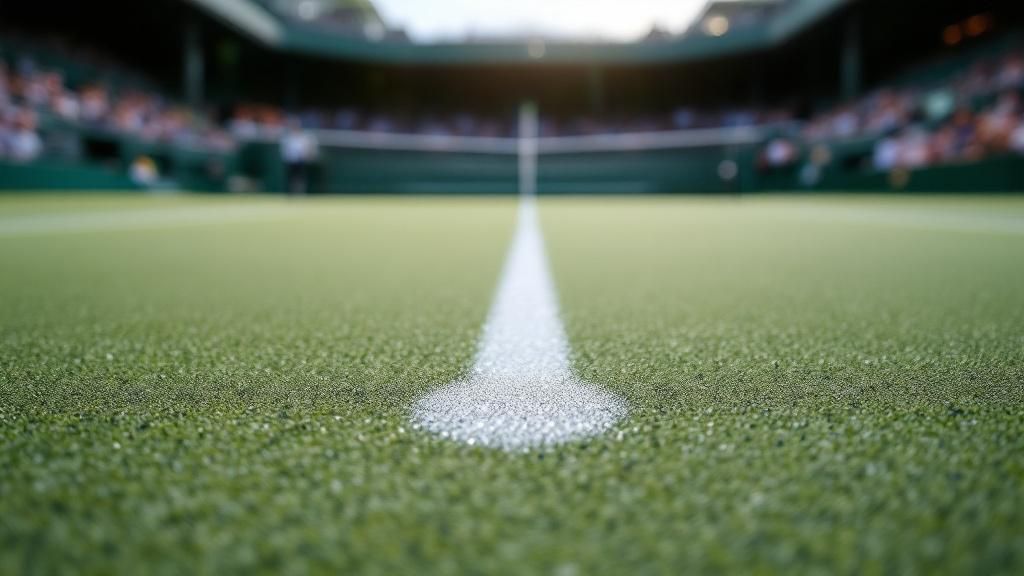
The All England Lawn Tennis and Croquet Club has taken a significant step towards ensuring athlete safety by deploying state-of-the-art court technology at Wimbledon. As injuries from slips and falls continue to concern the global tennis community, the Grounds Committee has developed specialist surface solutions designed to enhance grip and minimise joint stress on the joints of competitors. This groundbreaking initiative promises to revolutionise the championship experience whilst upholding the traditional grass court identity and distinctive playing characteristics that have characterised the competition for generations.
Innovative Surface Technology at the All England Club
The All England Lawn Tennis and Croquet Club has adopted a progressive approach to player welfare through the implementation of advanced court surface technology. This leading-edge project represents a fundamental shift in how the Championships focus on athlete safety without undermining the traditional grass court experience that has become synonymous with Wimbledon. The Grounds Committee’s dedication to advancement showcases the club’s dedication to evolving with modern sporting standards.
The innovative surface technology incorporates complex structural concepts designed to reduce injury potential whilst retaining the unique performance qualities that athletes and audiences value. By incorporating advanced materials into the facility infrastructure, Wimbledon has placed itself at the leading edge of playing surface innovation. This balanced approach confirms that the tournament maintains its iconic status whilst incorporating current protective measures and medical advancements.
Modern Materials and Engineering
The technical basis of Wimbledon’s new court surfaces relies upon meticulously selected materials developed to improve safety and performance. These components operate in concert to increase grip reliability, reduce slip incidents, and decrease joint impact forces during rigorous match conditions. The technical team has undertaken thorough evaluation to confirm that the new materials satisfy strict performance requirements whilst aligning with the grass court’s natural characteristics and weather-related changes.
The deployment procedure required cooperation of leading sports science experts, engineering experts, and turf professionals. Their pooled experience has produced a complex solution that tackles the primary concerns identified by elite athletes and medical practitioners. The new technology embodies extensive investigative effort, ensuring that every aspect of the court surface adds significantly to improved player safety and performance consistency during the event.
- Improved grip technology minimises slipping incidents during competitive play significantly.
- Impact-absorbing materials reduce stress on the knees, ankles, and lower limbs.
- Moisture management systems maintain ideal playing conditions during tournament duration.
- Durability enhancements guarantee consistent surface performance throughout multiple playing weeks.
- Grass integration maintains traditional playing characteristics and visual appeal genuinely.
Participant Safety and Performance Gains
The introduction of this advanced court surface technology constitutes a pivotal shift for professional tennis at Wimbledon. Players can now perform with enhanced certainty, knowing that the superior grip and cushioning properties substantially lower the potential for injury. This technological progress underscores the All England Club’s steadfast dedication to player safety whilst protecting the classic grass court character that makes Wimbledon distinctly renowned and world-renowned.
Beyond injury avoidance, the new surface technology offers significant performance benefits for competitors. Improved grip allows athletes to deliver explosive movements, rapid directional changes, and forceful baseline tactics with improved stability. The enhanced playing surface enable athletes to display their complete skill set whilst decreasing physical stress linked to demanding competitive play, ultimately promoting longer, more competitive careers within competitive professional tennis.
Preventing Injuries and Enhanced Comfort
The cutting-edge materials used in the new court surface have been carefully designed to address the prevalent injuries associated with tennis. The impact-dampening characteristics efficiently reduce impact forces transferred to players’ legs and joints during dynamic actions, serving and rapid deceleration. Healthcare specialists and athletic researchers have confirmed these advancements through thorough evaluation, confirming notable improvements in incidence of injuries amongst professional athletes competing on the redesigned playing areas.
Player comfort has been substantially enhanced through thorough evaluation of surface feedback and responsiveness. The technology delivers superior ball response performance whilst maintaining the standardised playing surface required for competitive fairness. Athletes indicate increased self-assurance during play, attributing this to the reliable surface behaviour and decreased physical exertion. These comfort improvements contribute significantly to better performance results and greater enjoyment throughout tournament play.
- Superior grip reduces slip-related injuries in play.
- Shock absorption minimises joint stress and impact-related damage.
- Better stability enables dynamic athletic movements safely.
- Consistent surface behaviour ensures predictable ball behaviour.
- Reduced fatigue permits extended competitive performance.
Implementation and Future Outlook
The Wimbledon Grounds Committee has established a detailed deployment plan, beginning with the secondary courts during the 2024 campaign. This staged rollout allows the committee to track performance data and collect important information before rolling out the technology across every competition venue. The advanced court surface demonstrates exceptional longevity and maintains optimal playing conditions throughout lengthy tournament runs, considerably decreasing maintenance requirements whilst ensuring consistent player experience across all matches and playing surfaces.
Looking ahead, the committee foresees that this technological advancement will create a standard for other Grand Slam tournaments and professional tennis venues globally. The investment underscores Wimbledon’s commitment to innovation without compromising its established principles and grass court heritage. Preliminary evidence suggest that the upgraded protective systems will attract top-tier players, potentially enhancing the tournament’s standing further whilst establishing new industry standards for player welfare and court surface excellence.
Changeover Schedule and Player Input
The rollout schedule spans eighteen months, with extensive assessment occurring during 2024 and complete implementation anticipated by the Championships in 2025. The Grounds Committee has focused on collecting feedback from elite athletes, coaching staff, and medical personnel to ensure the technology satisfies stringent technical specifications. Initial responses from professional competitors have been overwhelmingly positive, with players highlighting the enhanced steadiness and lower joint impact during rigorous practice and competitive matches on the newly laid playing surfaces.
Player discussion groups have shown that the improved grip design significantly improves confidence during rapid directional changes and powerful motion sequences. Medical professionals have documented measurable reductions in ankle and knee strain measurements during initial evaluations. The feedback loop continues to operate, with the review panel conducting quarterly reviews and implementing small modifications based on expert feedback. This partnership strategy confirms that the system evolves in response to genuine player experiences and needs.
- Outer courts upgraded during the 2024 season for comprehensive performance evaluation.
- Centre and Number One courts undergoing technology installation by autumn 2024.
- Professional players delivering detailed feedback through formal consultation sessions.
- Medical team tracking injury statistics and physiological response measurements consistently.
- Committee planning expansion of technology to training facilities by 2025.
